7 AI Tools Every Real Estate Agent Needs in 2025
7 AI Tools Every Real Estate Agent Needs in 2025
AI tools are transforming real estate in 2025, helping agents save time, close more deals, and meet growing client expectations. From automating lead qualification to creating immersive virtual tours, these tools simplify repetitive tasks and enhance decision-making. Here's a quick look at the top seven solutions:
- Oppy: A virtual assistant that qualifies leads, schedules consultations, and updates CRMs.
- Elise AI: Streamlines leasing processes with automated tour scheduling and tenant inquiries.
- HouseCanary: Delivers instant property valuations and market insights.
- Write.Homes: Generates SEO-friendly property listings from MLS data.
- Matterport: Creates 3D virtual tours for engaging property showcases.
- Reonomy: Provides detailed commercial property intelligence and ownership data.
- AI Market Forecasting Tools: Predicts market trends and identifies high-growth areas.
These tools are essential for agents who want to stay competitive in today’s fast-moving real estate market. They handle routine tasks, improve client interactions, and provide actionable insights, allowing agents to focus on building relationships and closing deals.
Top 6 A.I. Tools for Realtors in 2025 (And Exactly How to Use Them)
::: @iframe https://www.youtube.com/embed/_YYRK7YreJI :::
1. Oppy: AI Virtual Assistant for Real Estate Agents
Oppy is an AI-powered virtual assistant tailored specifically for real estate professionals. Available 24/7, it takes care of routine tasks like lead qualification, freeing up agents to focus on closing deals and building client relationships. It effortlessly fits into existing workflows, making it a valuable addition to any real estate operation. Let’s dive into how Oppy reshapes lead qualification and other key processes to improve efficiency.
Lead Qualification and Generation Capabilities
Oppy simplifies lead management by handling the initial qualification process. It interacts with potential clients, ensuring only serious prospects move forward. When a high-priority lead is identified, Oppy can even schedule consultations directly on your calendar, saving time and streamlining your workflow. This approach allows agents to focus on what they do best - negotiating deals and delivering exceptional service.
Automation of Repetitive Tasks
Repetitive administrative tasks can eat up a lot of time, but Oppy takes care of them seamlessly. It handles scheduling, follow-ups, CRM updates, and even transcribes calls, ensuring every interaction is logged accurately. Need help creating property descriptions? Oppy can assist with that too, helping agents craft compelling listings that highlight the best features of a property.
Improving Customer Engagement
Oppy doesn’t just handle the back-end tasks - it also enhances how agents engage with clients. Its instant booking feature lets prospects schedule viewings or consultations without the usual back-and-forth. During open houses or property tours, Oppy’s QR code functionality enables quick and easy chat connections. These tools ensure that client interactions are smooth and responsive, helping agents build stronger relationships around the clock.
Integration with Real Estate Tools and Compliance with US Laws
In addition to its scheduling and engagement tools, Oppy is designed with compliance and integration in mind. It helps agents meet buyer-broker commission consent laws and seamlessly integrates with existing CRM systems. To maintain a personalized touch, agents can customize the assistant’s name to align with their brand. Oppy also ensures that no lead is left unattended, thanks to its call and text management features - perfect for keeping up during hectic times.
2. Elise AI: Automated Leasing and Tour Scheduling

Elise AI simplifies the rental and leasing process for agents and property managers by automating key tasks. From handling initial inquiries to scheduling tours, the platform takes care of repetitive workflows, freeing up agents to focus on more impactful responsibilities. Here's a closer look at what makes Elise AI stand out.
Lead Qualification and Generation Capabilities
Elise AI efficiently screens potential tenants by gathering critical details like income, move-in timelines, and property preferences. It also collects information about pet ownership, parking needs, and desired amenities. This ensures unqualified leads are filtered out and helps match prospective renters with the most suitable properties.
Automation of Repetitive Tasks
Scheduling tours can be a time drain for agents, but Elise AI handles it seamlessly. It coordinates available time slots with property access, checks the agent's calendar, and manages scheduling logistics. The system also sends confirmations with directions and follows up with prospects after tours, ensuring consistent communication and a polished presentation across all listings.
Improved Customer Engagement
Elise AI enhances customer interaction by delivering timely, personalized updates. Prospective tenants are notified when new rental units become available or when pricing changes occur. Additionally, the platform quickly responds to common questions about lease terms, pet policies, and building amenities, keeping prospects informed and engaged.
Integration with Real Estate Tools and Compliance with US Laws
Elise AI connects with essential property management systems and MLS platforms to ensure availability and pricing information is always accurate. Updates happen automatically when units are leased or rental rates change, reducing the risk of double bookings or outdated listings. The platform also adheres to fair housing standards by using standardized screening processes and maintaining detailed interaction records. This helps agents stay compliant with strict rental regulations while maintaining transparency and professionalism.
3. HouseCanary: AI-Driven Real Estate Data and Valuations
HouseCanary equips real estate agents with instant property valuations and detailed market insights, helping them make informed decisions. By leveraging analytics, it enhances the accuracy of market trend analysis and property value estimates.
This focus on data works seamlessly alongside tools that streamline tasks and improve client interactions, making it a valuable addition to any AI toolkit.
4. Write.Homes: Automated Content Creation for Listings
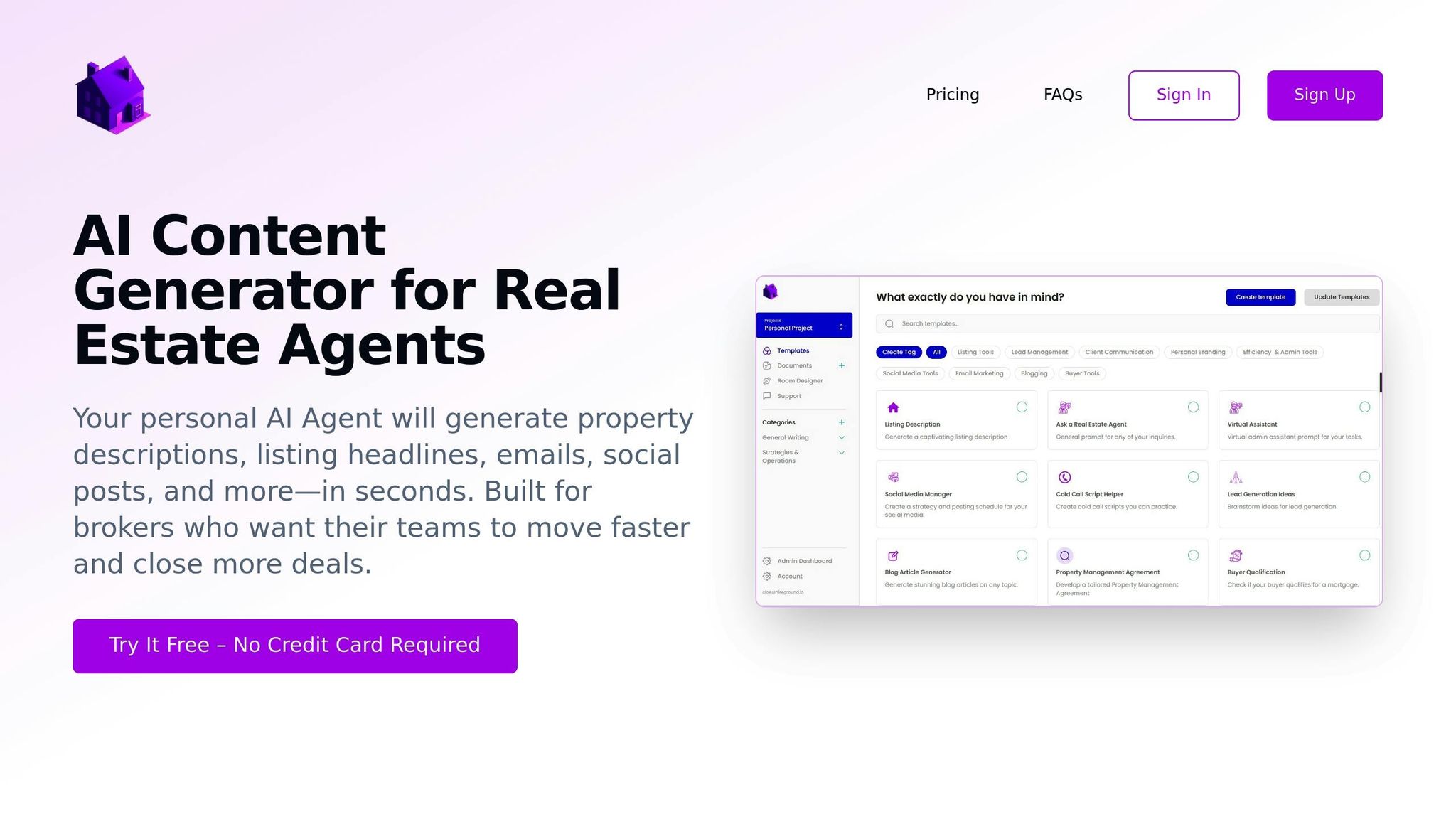
Write.Homes takes efficiency to the next level by automating the process of creating property listings. With just basic MLS data, it generates professional, SEO-friendly content in minutes, ensuring a consistent tone and style across your portfolio[2].
Automation of Repetitive Tasks
Much like other AI tools, Write.Homes streamlines repetitive tasks. It uses customizable MLS templates and even supports contract analysis[1]. Pricing plans are flexible, starting at $8 per month for 18,000 words, scaling to $18 per month for 50,000 words, and offering an Agency plan at $85 per month for up to 1 million words[1]. This makes it a practical choice for agents who need to create multiple listings each month.
Integration with Real Estate Tools and Legal Considerations
Write.Homes integrates seamlessly with major listing platforms and provides a freemium option that includes 1,000 free words for testing[1][3].
However, while the platform supports MLS integration and contract analysis, agents should take extra care to ensure that the generated content complies with Fair Housing Act guidelines and local advertising laws. Write.Homes does not explicitly claim full compliance with all U.S. real estate marketing regulations, so a final review by agents is essential.
sbb-itb-a4dc1bd
5. Matterport: AI-Powered Virtual Tours
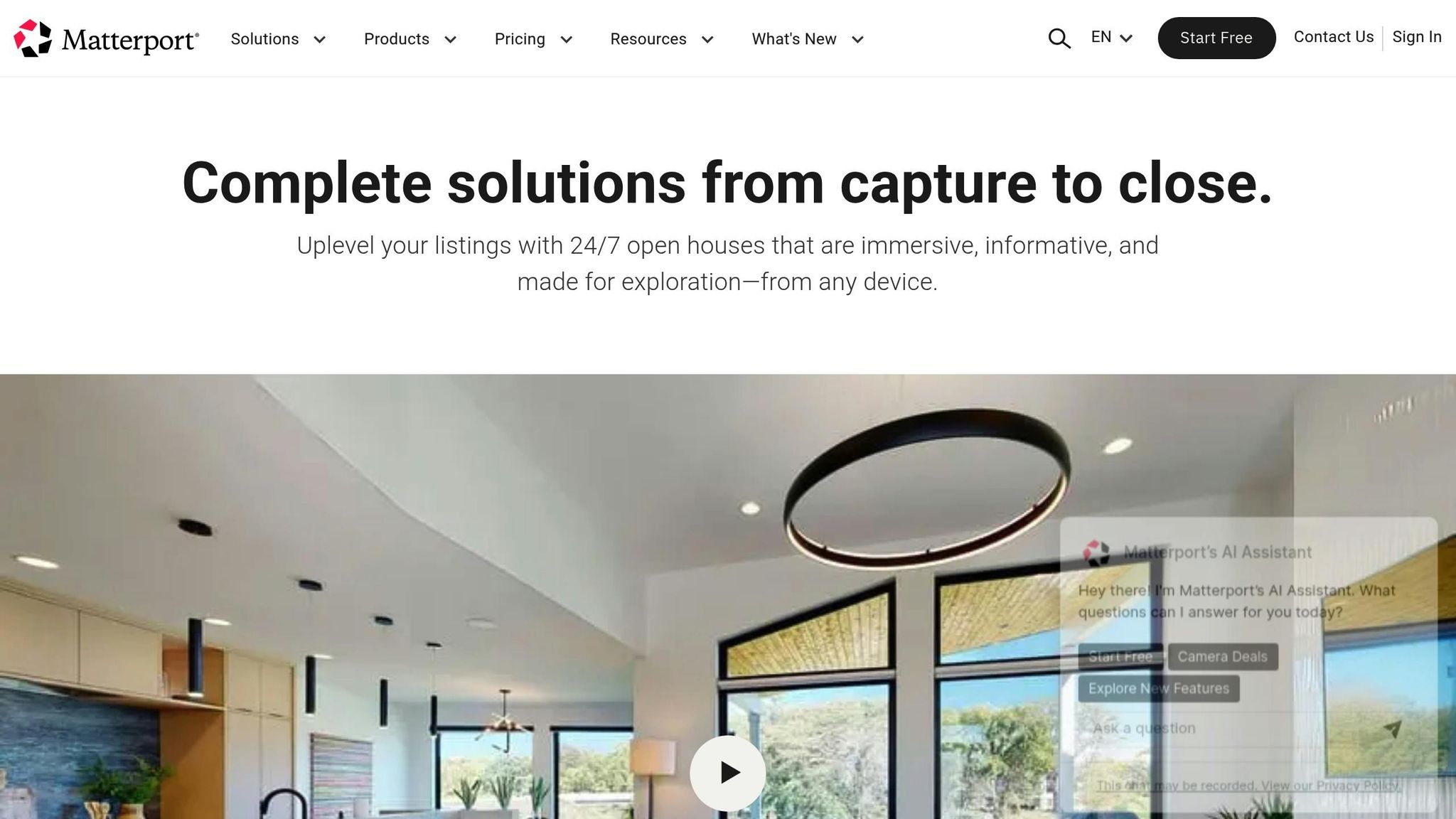
Matterport offers an engaging way to showcase properties with its immersive 3D virtual tours. Using advanced scanning technology, the platform captures every detail of a space, creating interactive digital experiences that let potential buyers explore properties from anywhere. This level of precision helps create more meaningful interactions with clients.
Boosting Buyer Engagement
With Matterport’s virtual tours, prospective buyers can explore properties at their own pace, gaining a clear understanding of the layout and standout features. This interactive experience not only keeps users engaged but also helps them make more confident decisions about a property.
Simplifying Marketing Efforts
Matterport takes the hassle out of creating marketing materials. The platform automatically generates high-quality visuals, floor plans, and other assets, making it easy to integrate them into property listings. This automation saves time and reduces the need for manual effort in preparing marketing content.
Seamless Integration with Real Estate Tools
Matterport also connects smoothly with various real estate platforms and tools. By embedding virtual tours directly into listings, agents can enhance their current workflows and offer buyers a more dynamic and informative experience. This integration ensures that property listings stand out in a competitive market.
6. Reonomy: AI-Powered Property Intelligence

Reonomy takes property intelligence to a new level, offering insights that complement tools like Matterport and Write.Homes. It provides a comprehensive view of the commercial real estate market by combining data from public records, building permits, and ownership details. The result? Detailed property profiles that help users make smarter, data-backed decisions.
Lead Qualification and Generation
Reonomy’s powerful filtering and search tools make it easier to identify property owners who might be ready to sell. By organizing ownership information and historical transaction data, it creates targeted prospect lists to streamline lead generation.
Simplifying Repetitive Research
Say goodbye to manual property research. Reonomy automates the process by gathering crucial details like ownership history and comparable sales into easy-to-digest reports. It even sends alerts when there are changes in property status or when new listings hit the market, keeping users ahead of the curve.
Seamless Integration with Real Estate Tools
Reonomy works seamlessly with CRM systems and other real estate platforms through its strong API capabilities. This ensures smooth data sharing while staying compliant with privacy and data usage regulations, making it a reliable choice for professionals in the industry.
7. AI Tools for Market Forecasting
Market forecasting is a game-changer for real estate agents aiming to stay on top of market trends and provide clients with well-informed, data-backed advice. AI-powered tools dive into vast datasets - like economic indicators, demographic changes, and historical sales data - to predict future market conditions with impressive accuracy.
These tools pull information from key sources such as mortgage rates, employment numbers, population growth, and seasonal buying habits. The result? Predictive analytics that help agents forecast shifts in home prices, inventory levels, and even identify neighborhoods primed for growth.
Lead Qualification and Generation Capabilities
AI forecasting tools are particularly adept at spotting new opportunities. By examining data on demographic trends, new business developments, and infrastructure projects, these platforms can highlight areas where property values are likely to climb. This gives agents a competitive edge, enabling them to reach out to potential sellers in high-growth neighborhoods or connect with buyers looking for lucrative investments.
These tools also analyze buyer behavior patterns, helping agents determine the best times to launch targeted marketing efforts. By predicting market activity, agents can create tailored campaigns and build prospect lists that align with upcoming trends.
Automation of Repetitive Tasks
One of the biggest perks of these tools is their ability to handle repetitive tasks. They monitor economic indicators, housing inventory, and local market conditions, generating concise reports and sending alerts - all without the need for manual updates.
Additionally, these platforms can automatically create customized market reports for clients. They pull relevant data, generate polished presentations, and allow agents to fine-tune the details before sharing them. This saves time while maintaining a professional edge.
Boosting Client Engagement
With AI-generated forecasts in hand, agents can shift from being mere transaction facilitators to becoming trusted advisors. They can offer clients detailed insights into the best times to buy or sell, expected price trends, and long-term projections for specific neighborhoods.
The visual tools these platforms provide - like interactive charts and dashboards - turn complex data into easy-to-understand insights. This allows agents to walk clients through market projections during meetings, empowering them to make well-informed decisions about their real estate goals.
Seamless Integration and Legal Compliance
Modern AI forecasting tools integrate effortlessly with existing systems, such as CRM platforms and MLS databases, ensuring that insights are directly accessible within an agent’s daily workflow. This means property valuations and market assessments are automatically updated, saving time and reducing errors.
These platforms also prioritize compliance with Fair Housing Act regulations, ensuring algorithms exclude discriminatory factors in their predictions. They adhere to data privacy laws, which is especially important when handling sensitive demographic and market information across various regions. Together with other AI tools, these forecasting solutions form a key part of the tech arsenal driving success in today’s real estate industry.
Tool Comparison Table
When it comes to lead qualification, customer engagement, and market insights, these tools are designed to address the core challenges of modern real estate operations. Below is a detailed comparison of seven essential AI tools, focusing on their primary functions, standout features, and areas where they might fall short. (For the latest pricing information, it's best to reach out to the vendors directly.)
| Tool | Primary Function | Key Strengths | Pricing Range | Best For | Limitations |
|---|---|---|---|---|---|
| Oppy | AI Virtual Assistant | 24/7 support, lead generation, follow-ups, CRM integration, and compliance management | Contact vendor | Businesses seeking end-to-end workflow automation | Pricing details are not readily available |
| Elise AI | Leasing & Tour Scheduling | Automates routine tasks, freeing agents to focus on core responsibilities | Contact vendor | Leasing teams and property managers | Primarily tailored for rental workflows |
| HouseCanary | Property Valuations & Market Insights | Provides in-depth, data-driven market analysis | Contact vendor | Agents needing detailed market analytics | May feel overwhelming for those new to data analysis |
| Write.Homes | Automated Content Creation for Listings | Creates listing descriptions and boosts SEO efforts | Contact vendor | Agents handling high listing volumes | Content might require manual tweaks for personalization |
| Matterport | Virtual Tours | Enables 3D scanning and immersive property tours | Contact vendor | Agents specializing in luxury or premium properties | Requires investment in equipment and training |
| Reonomy | Property Intelligence | Delivers extensive commercial property data | Contact vendor | Specialists in commercial real estate | Best suited for commercial property needs |
| Market Forecasting Tools | Predictive Analytics | Helps identify market trends and assess investment opportunities | Contact vendor | Agents focusing on investment-driven strategies | Requires expertise to interpret market forecasts effectively |
When deciding on the right tool, consider factors like ease of integration, learning curve, and how well the features align with your specific business needs. Whether you're looking to simplify scheduling, enhance property presentations, or leverage market analytics, selecting the right platform can make all the difference in tackling real estate challenges effectively.
Conclusion
Looking at the capabilities of these tools, it’s evident that AI is reshaping how real estate professionals approach their work. By 2025, the industry will demand smarter, faster, and more efficient solutions, and these seven AI tools are leading the charge. From streamlining lead contact to closing property deals, they’re cutting down on tedious tasks and allowing agents to focus on what truly matters - building relationships and closing sales.
- Oppy ensures no lead is ever missed with its 24/7 support.
- Elise AI takes the hassle out of scheduling by automating the entire process.
- HouseCanary delivers precise, data-backed property valuations, removing pricing uncertainty.
- Write.Homes simplifies listing creation by generating professional descriptions in seconds.
- Matterport brings properties to life with immersive virtual tours.
- Reonomy offers critical insights into commercial properties.
- AI-powered market forecasting tools help agents stay ahead of market trends.
These tools aren’t just a luxury - they’re becoming a necessity. In today’s competitive real estate market, adopting AI means being able to handle more clients, respond faster, and provide sharper insights. Agents who fail to adapt risk falling behind those who embrace these advancements to deliver better service at scale.
The message is simple: Blend your expertise with AI to stay competitive. These tools are ready to transform your workflow. Start using them today and position yourself for success in tomorrow’s real estate market.
FAQs
::: faq
How can AI tools like Oppy and Elise AI help real estate agents save time and boost productivity?
AI tools like Oppy and Elise AI are reshaping the way real estate agents operate, making their workflows smoother and more efficient. Oppy takes on tasks like lead qualification and customer engagement, cutting down the time agents spend on manual follow-ups so they can concentrate on closing deals. On the other hand, Elise AI uses conversational AI to handle client inquiries and administrative duties, freeing up agents to nurture relationships and drive sales.
Integrating these tools into daily routines doesn't just save time - it boosts productivity and helps agents stay ahead in the fast-moving real estate world. Many agents have already seen the benefits, from reduced stress to happier clients, by weaving AI into their processes. :::
::: faq
What should I consider when adding AI tools to my real estate workflow?
When bringing AI tools into your real estate operations, it’s best to start with small, manageable tasks like automating lead qualification or scheduling. These are often time-consuming but easy to streamline, allowing you to quickly notice the benefits without disrupting your existing workflow.
Choose tools that are easy to use and align with your business objectives, whether that’s enhancing client communication or simplifying property recommendations. It’s also crucial to dedicate time to training your team and refining your processes to make the most of what AI has to offer. Taking a step-by-step approach ensures a smoother transition and helps boost overall efficiency. :::
::: faq
How can AI tools help real estate agents spot high-growth areas and market trends?
AI tools give real estate agents a powerful edge by analyzing vast amounts of data, including economic trends, past sales figures, and shifts in local demographics. These tools rely on advanced algorithms to detect patterns and predict changes in property values, helping agents identify high-growth areas and emerging market opportunities.
By automating the heavy lifting of research, AI delivers real-time insights that allow agents to zero in on neighborhoods with strong potential. This means they can make smarter, data-backed decisions, adjust their strategies more effectively, and stay competitive in a constantly evolving market. :::